The Infrastructure Behind Every Shipment
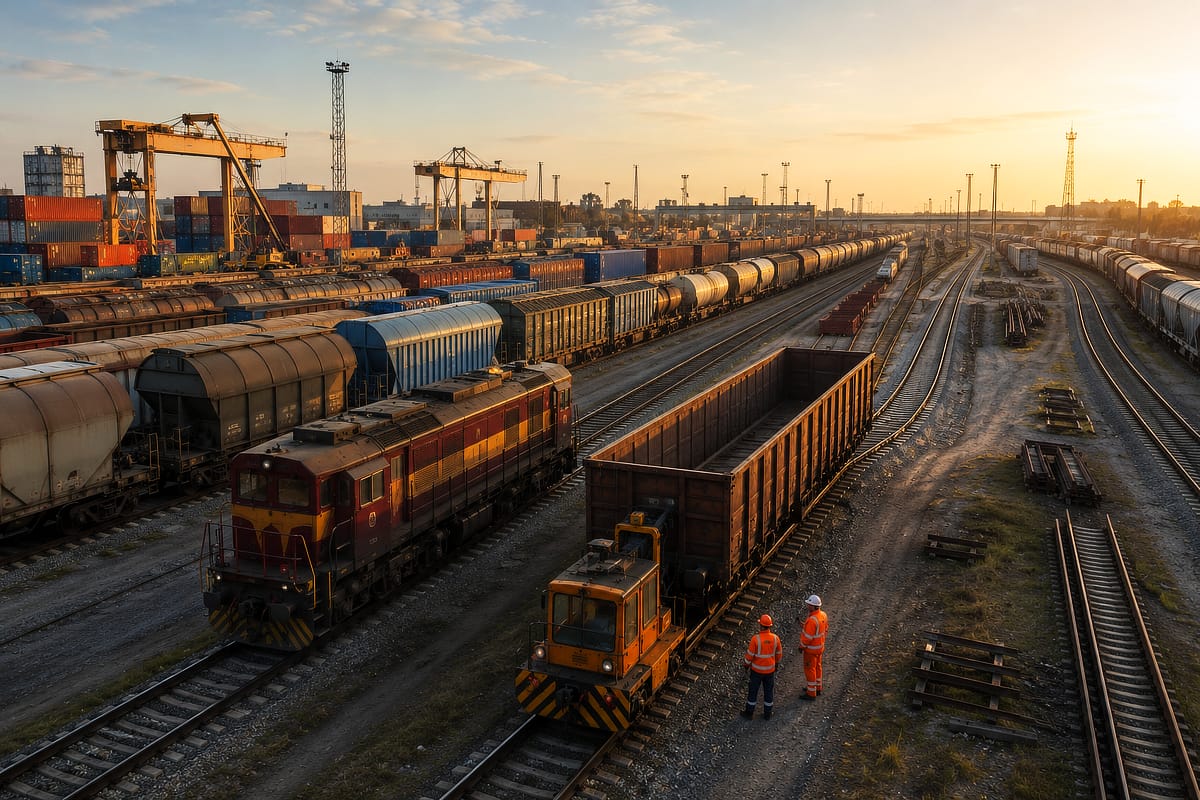
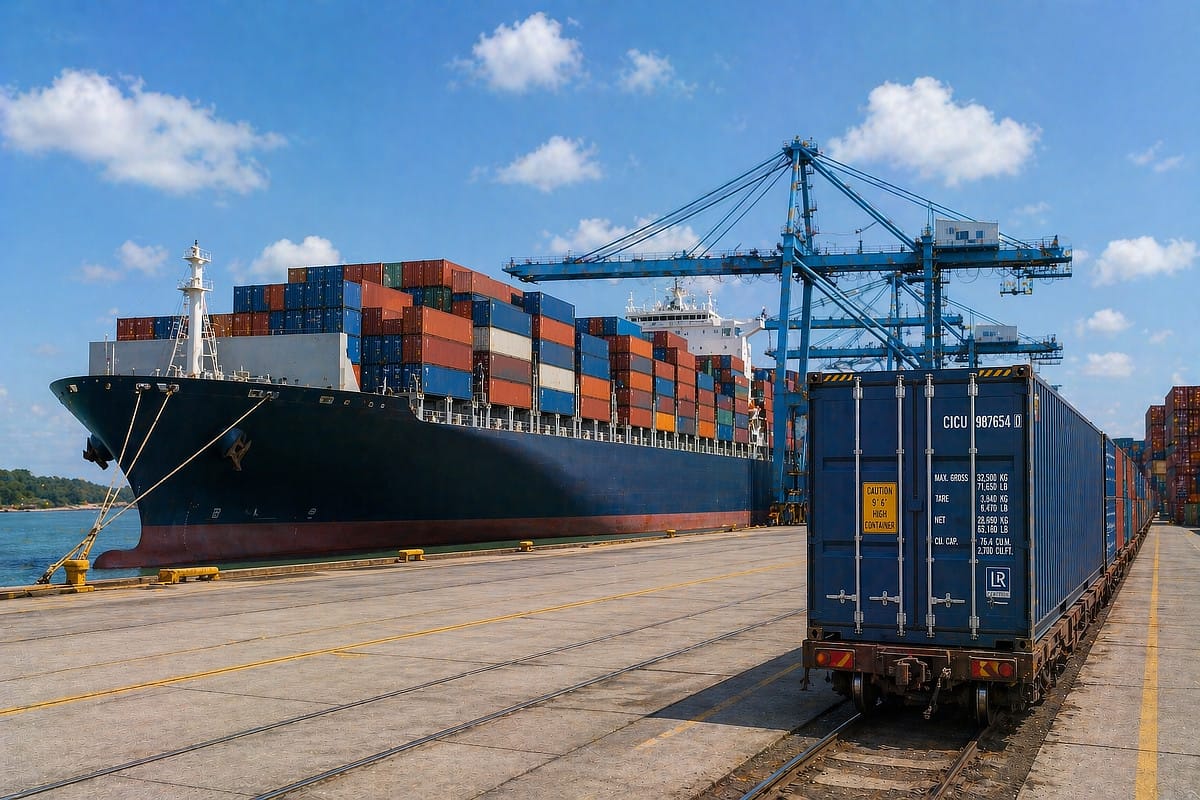
Strip global trade down to its essentials and you will find one constant: the container. Standardised, stackable, and engineered for efficiency, shipping containers are the quiet force moving everything from raw materials to finished products across continents.
Yet for all their ubiquity, container selection remains one of the most misunderstood decisions in freight logistics. Many businesses default to “standard” options without fully considering the implications on cost, cargo safety, compliance, and operational efficiency.
This is where experienced logistics partners separate themselves from transactional providers. At Confidex, containerisation is not treated as a commodity decision. It is treated as a strategic lever.
Why Container Selection Matters in Freight Logistics
Choosing the right container is not a technical detail. It is a commercial decision with direct impact on margins, timelines, and risk exposure.
An oversized container unnecessarily increases freight costs. An underspecified container exposes cargo to damage or regulatory breaches. A poorly chosen solution can disrupt multimodal flows, particularly when cargo transitions between sea, rail, and road.
In international trade, container selection also intersects with contractual obligations defined by Incoterms. Responsibility for risk transfer, insurance, and handling can hinge on how cargo is packed and transported.
In short, the container you choose determines how smoothly your logistics operation performs.
Understanding ISO Standards in Container Shipping
The efficiency of global logistics is due to standardisation. The International Organisation for Standardisation (ISO) introduced container specifications that allow containers to move seamlessly between ships, trains, and trucks.
The most common formats include:
- 20-foot containers (20’DC)
- 40-foot containers (40’DC)
- 40-foot high cube containers (40’HC)
These standardised dimensions ensure compatibility across ports, terminals, and transport systems worldwide. Without ISO compliance, intermodal logistics at scale would not exist.
Standard Dry Containers: The Industry Workhorse
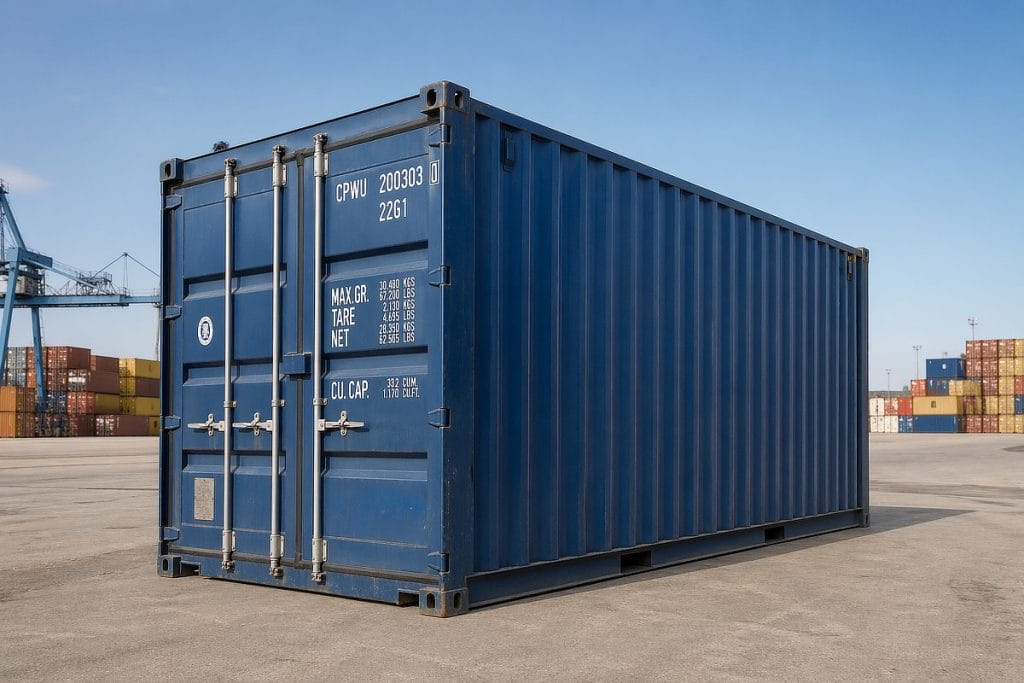
Standard dry containers, often referred to as dry vans, account for the majority of global shipments. They are enclosed, weatherproof units designed to transport general cargo.
20ft Standard Container (20’DC)
The 20-foot container is compact, dense, and efficient for heavy cargo. It is commonly used for commodities, machinery parts, and palletised goods where weight limits are reached before volume.
40ft Standard Container (40’DC)
Doubling the length of the 20ft unit, the 40ft container is suited for lighter, bulkier cargo. It offers greater volume without significantly increasing handling complexity.
40ft High Cube Container (40’HC)
The high cube variant adds extra vertical space, making it ideal for voluminous goods such as textiles, furniture, and consumer products.
These containers dominate global trade for a reason. They are versatile, widely available, and cost-efficient. But they are only the starting point.
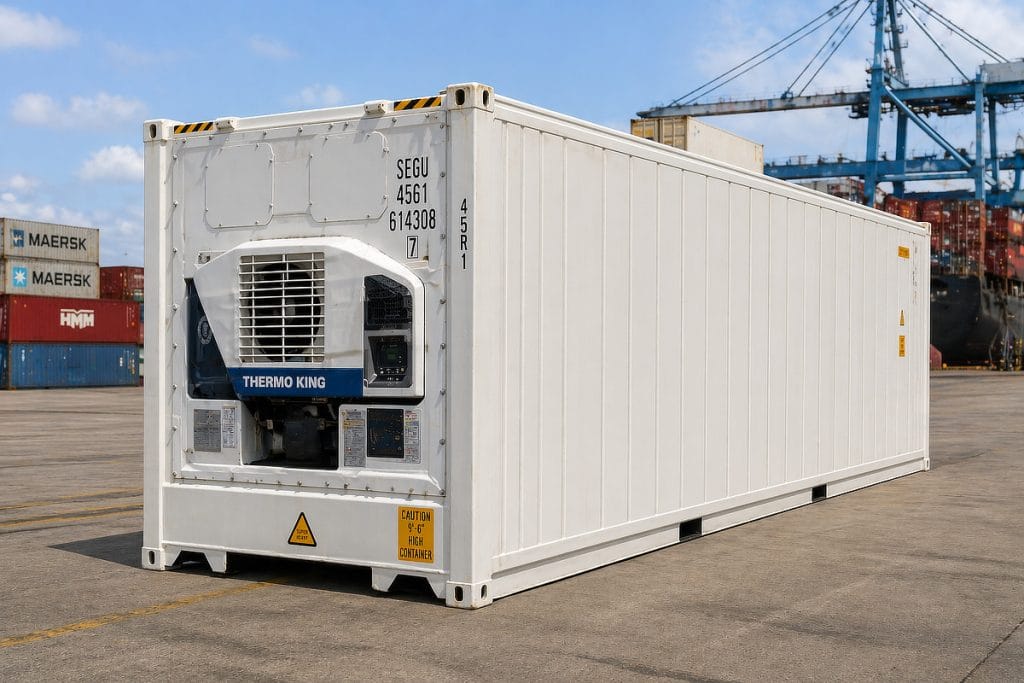
Refrigerated Containers: Precision in Cold Chain Logistics
Reefer containers are engineered to maintain controlled temperatures throughout transit. They are essential for industries where product integrity depends on strict environmental conditions.
Typical cargo includes:
- Fresh and frozen food products
- Pharmaceuticals
- Chemicals sensitive to temperature fluctuations
Unlike passive solutions, reefers actively regulate temperature using integrated cooling systems powered during transit. This introduces operational considerations such as power supply at ports, monitoring systems, and contingency planning.
For businesses operating in food or pharmaceutical supply chains, reefer logistics is not optional. It is mission-critical.
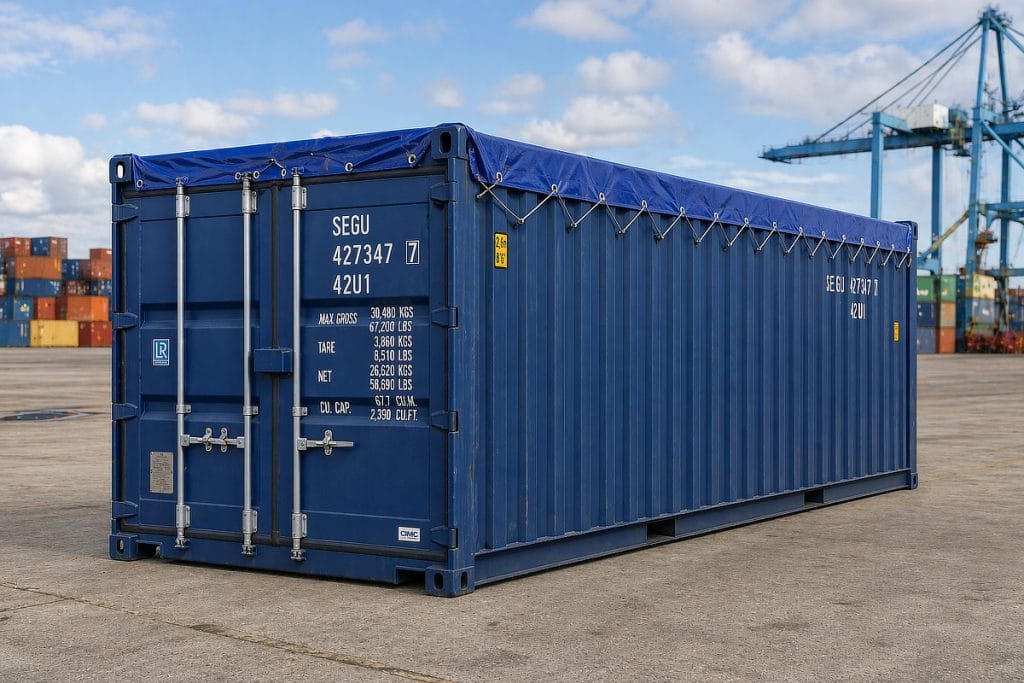
Open Top Containers: When Cargo Breaks the Rules
Not all cargo fits neatly through standard container doors. Open-top containers solve this by removing the rigid roof structure and replacing it with a tarpaulin cover.
This design allows cargo to be loaded vertically using cranes, making it ideal for:
- Industrial machinery
- Large equipment
- Over-height cargo
When dimensions exceed standard loading constraints, open top containers provide flexibility without requiring a complete shift to break bulk shipping.
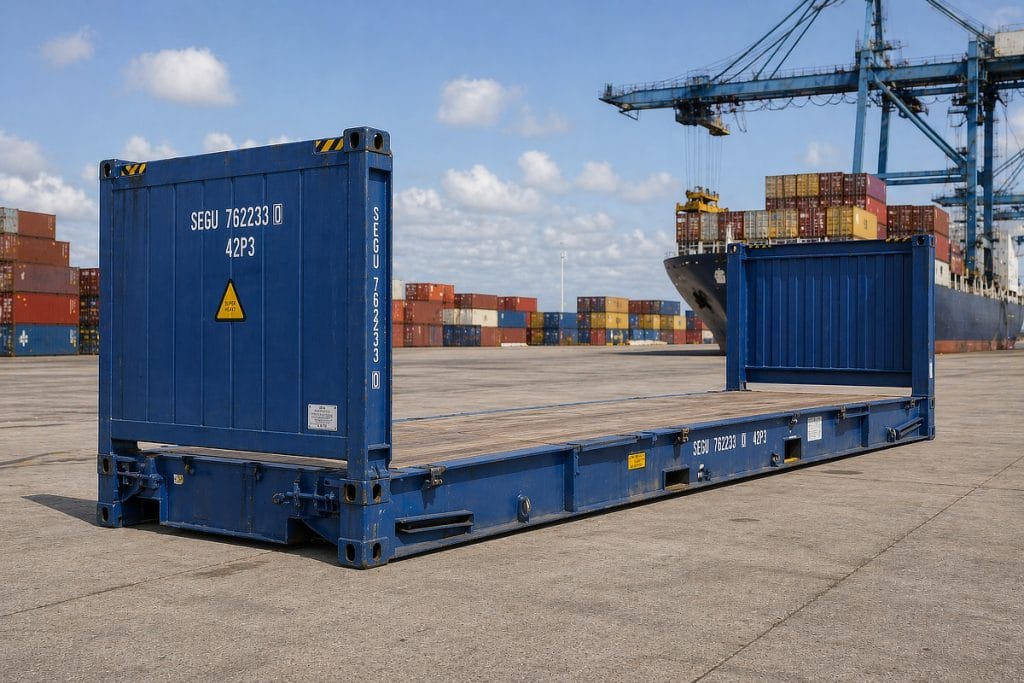
Flat Rack Containers: Built for Heavy and Oversized Cargo
Flat rack containers take flexibility further. With no side walls and collapsible end panels, they are designed to carry cargo that exceeds standard dimensions in width or height.
Typical applications include:
- Vehicles
- Construction equipment
- Large industrial components
Cargo is secured using specialised lashing techniques, making planning and expertise critical. Improper securing can lead to severe safety and compliance issues.
Flat racks are not just containers. They are engineered platforms for complex cargo.
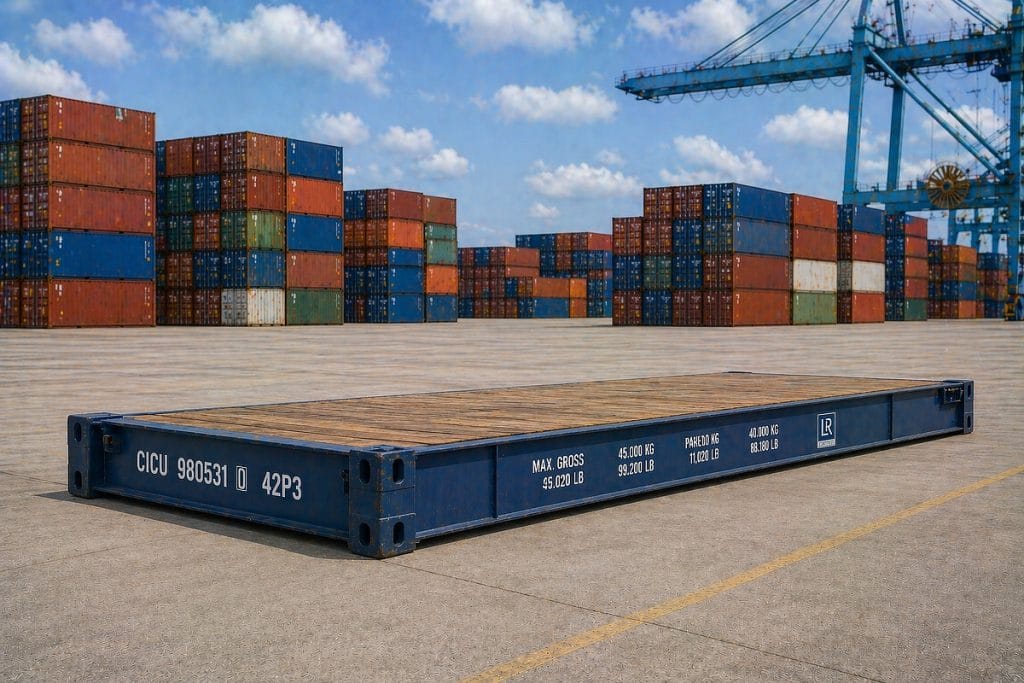
Platform Containers
Platform containers are the most stripped-back form of containerisation, consisting of a reinforced base with no side walls or end panels. Designed for cargo that exceeds the physical limits of standard containers, they provide unrestricted access from all sides, making them ideal for complex and heavy-duty logistics operations.
Typical applications include:
- Large industrial machinery and equipment
- Structural components (steel beams, prefabricated sections)
- Project cargo, such as turbines or generators
- Oversized loads that cannot be secured within flat rack dimensions
Their open design offers maximum flexibility, but also requires precise planning, weight distribution, and advanced lashing techniques to ensure cargo safety throughout transit.
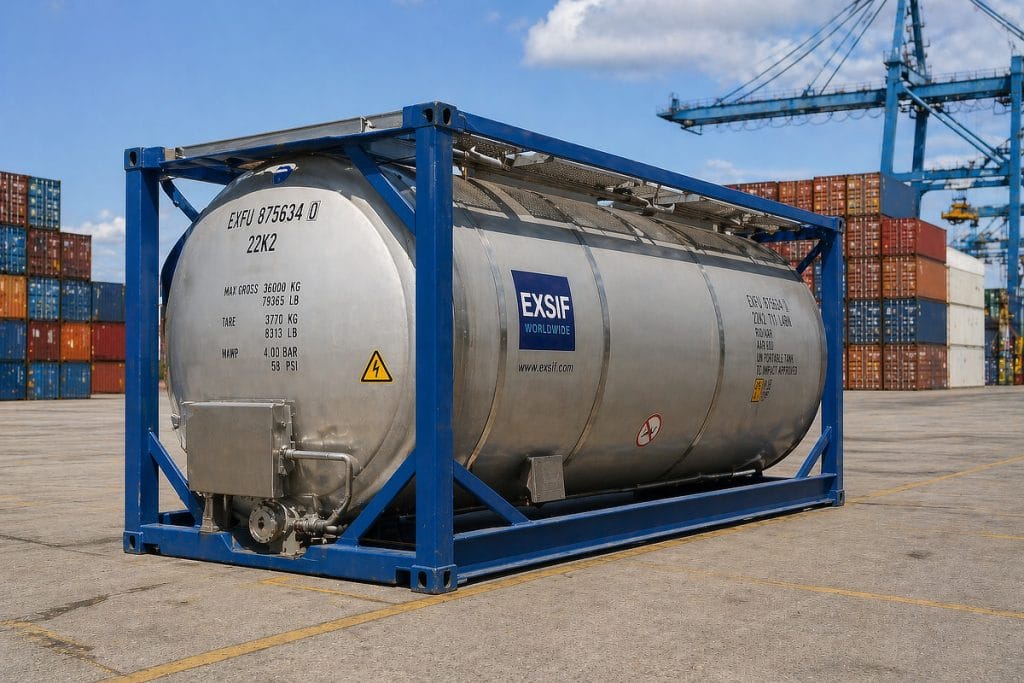
Tank Containers: The Standard for Liquid Transport
Tank containers, also known as ISO tanks, are purpose-built for transporting liquids, gases, and powders in bulk. They consist of a cylindrical tank mounted within a standard container frame.
They are widely used for:
- Chemicals
- Food-grade liquids (such as oils and wines)
- Hazardous materials
Tank containers offer high levels of safety, efficiency, and regulatory compliance. However, they require cleaning, certification, and careful handling, which can add operational complexity.
For many liquid cargo scenarios, they are the gold standard. But they are not always the most cost-effective option.
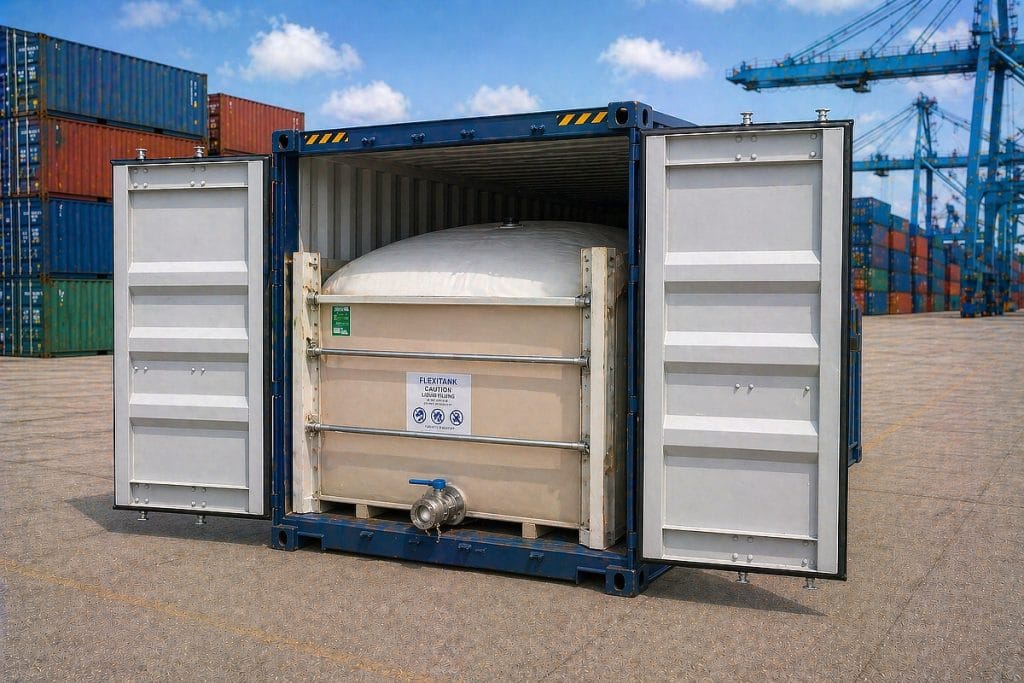
Flexitanks: A Smarter Alternative for Liquid Cargo
Flexitanks represent a more flexible approach to liquid transport. Installed inside a standard 20ft container, they transform it into a bulk liquid carrier.
This solution offers several advantages:
- Lower cost compared to ISO tanks
- Higher payload capacity
- Reduced the need for repositioning specialised equipment
For non-hazardous liquids such as food oils, lubricants, and certain chemicals, flexitanks provide a highly efficient alternative.
This is a key area where Confidex delivers measurable value. By combining technical expertise with operational execution, flexitank logistics becomes not just viable, but optimal.
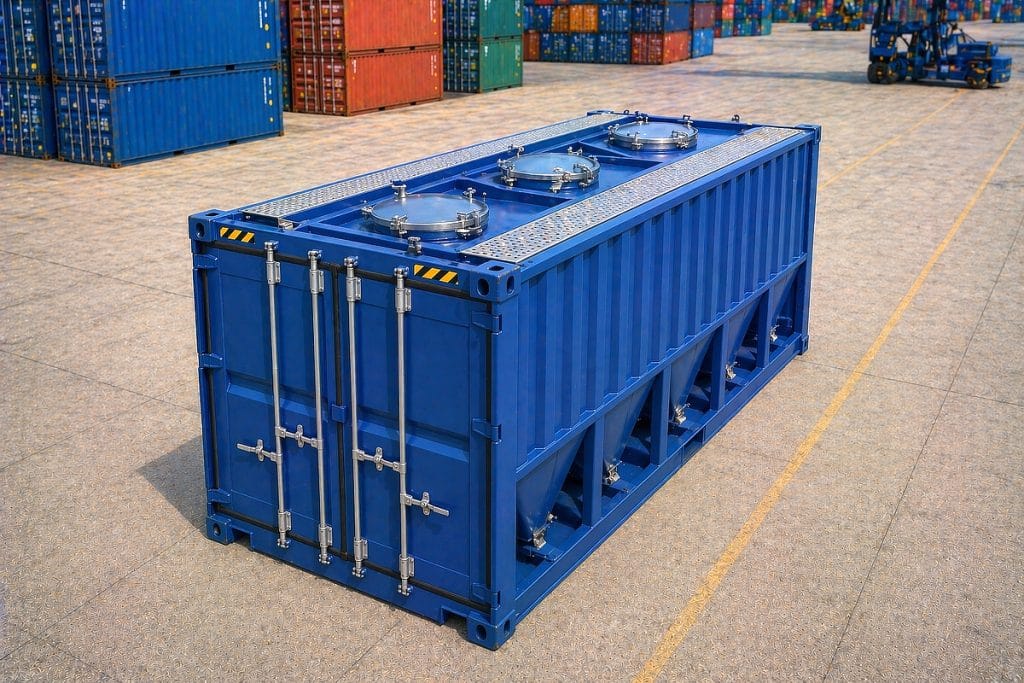
Bulk Containers: Moving Commodities at Scale
Bulk containers are designed for dry commodities such as grain, powders, and raw materials. They enable efficient loading and unloading through hatches or pressure systems.
They are widely used in:
- Agriculture
- Mining
- Industrial production
For businesses moving high volumes of raw materials, bulk containers reduce handling costs and improve throughput.
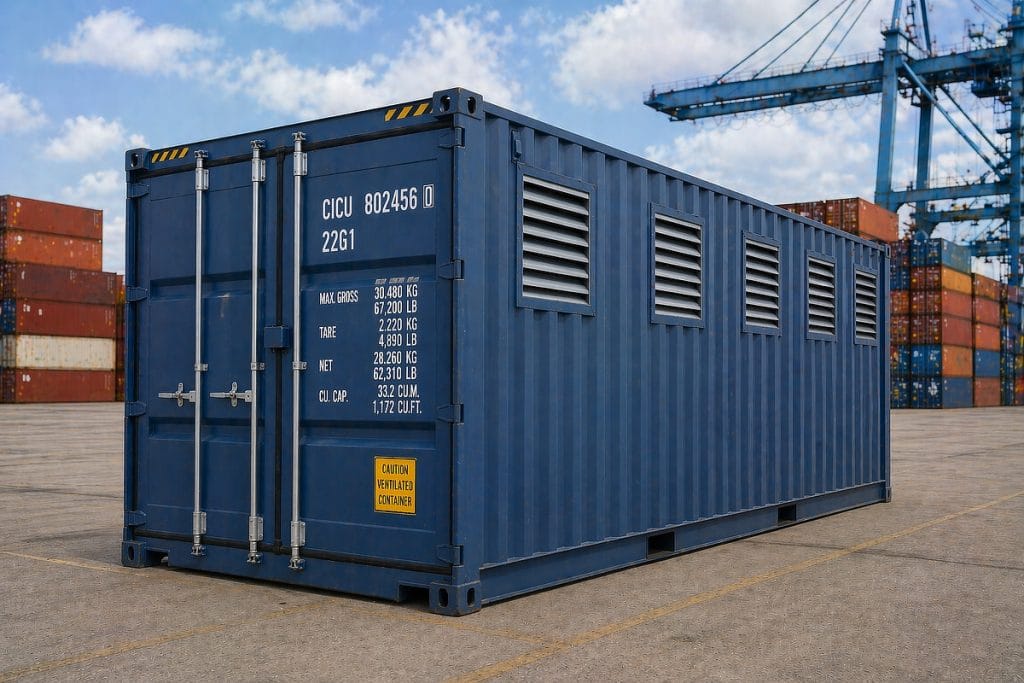
Ventilated Containers: Protecting Organic Cargo
Certain cargo types require airflow to prevent moisture buildup and spoilage. Ventilated containers provide controlled ventilation, making them suitable for:
- Coffee beans
- Cocoa
- Agricultural products
Without proper airflow, these goods can degrade rapidly during transit. Ventilated containers mitigate that risk.
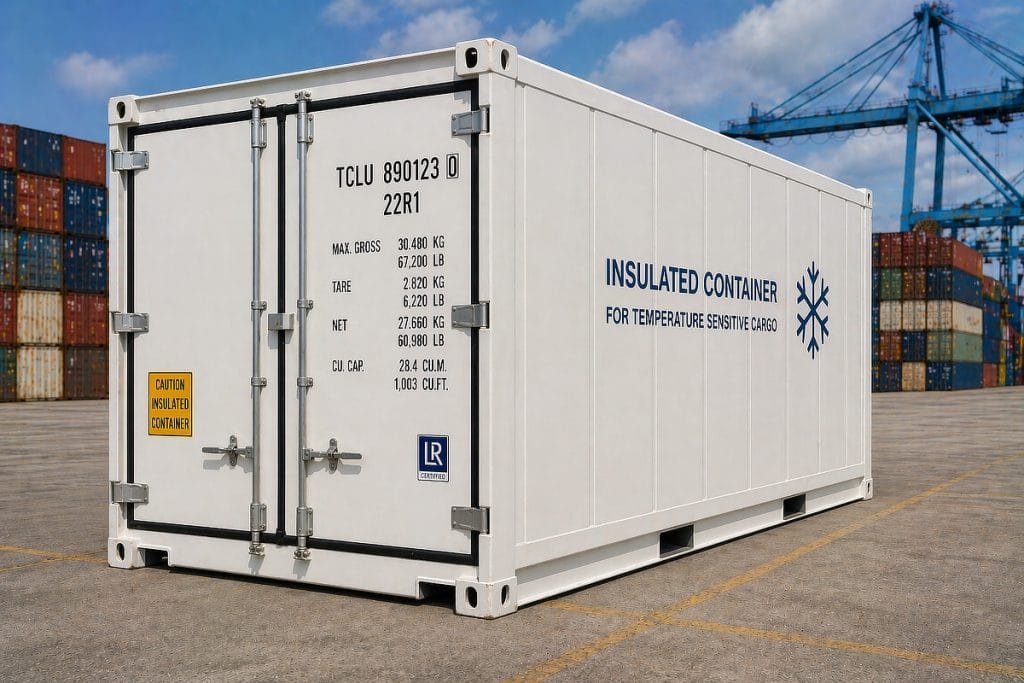
Insulated and Thermal Containers: Passive Temperature Control
Unlike reefers, insulated containers do not actively control temperature. Instead, they maintain internal conditions for a limited period.
They are used when:
- Short transit times are involved
- Active cooling is not required
- Temperature stability is sufficient
They occupy a middle ground between standard containers and refrigerated solutions.
Specialised Containers for Operational Flexibility
Beyond the main categories, several specialised containers exist to solve niche challenges.
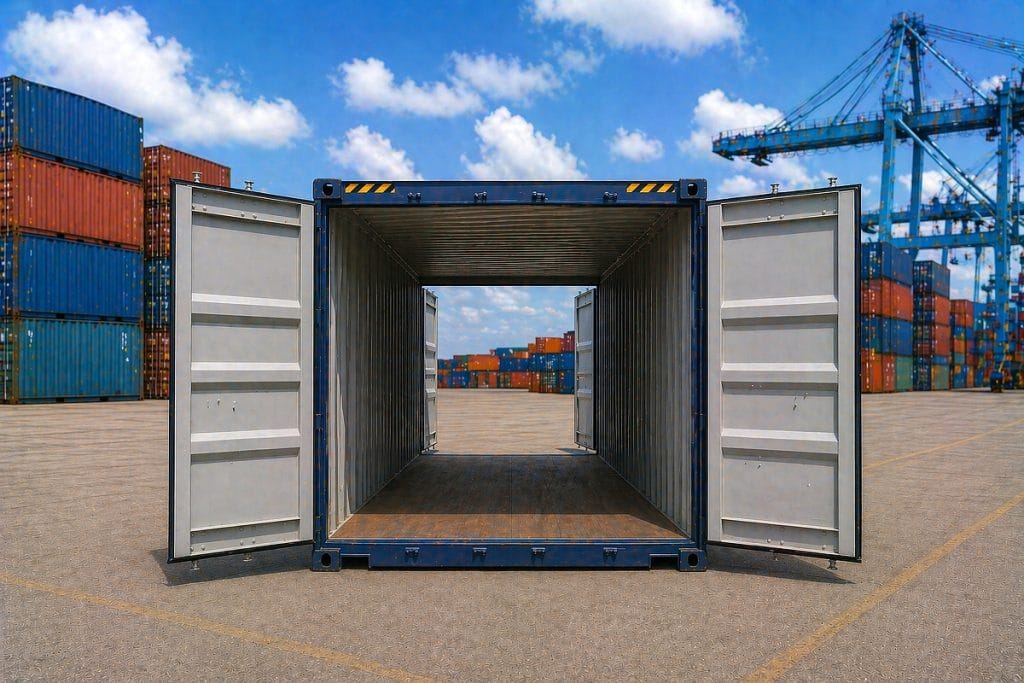
Double Door Containers
Access from both ends allows faster loading and unloading.
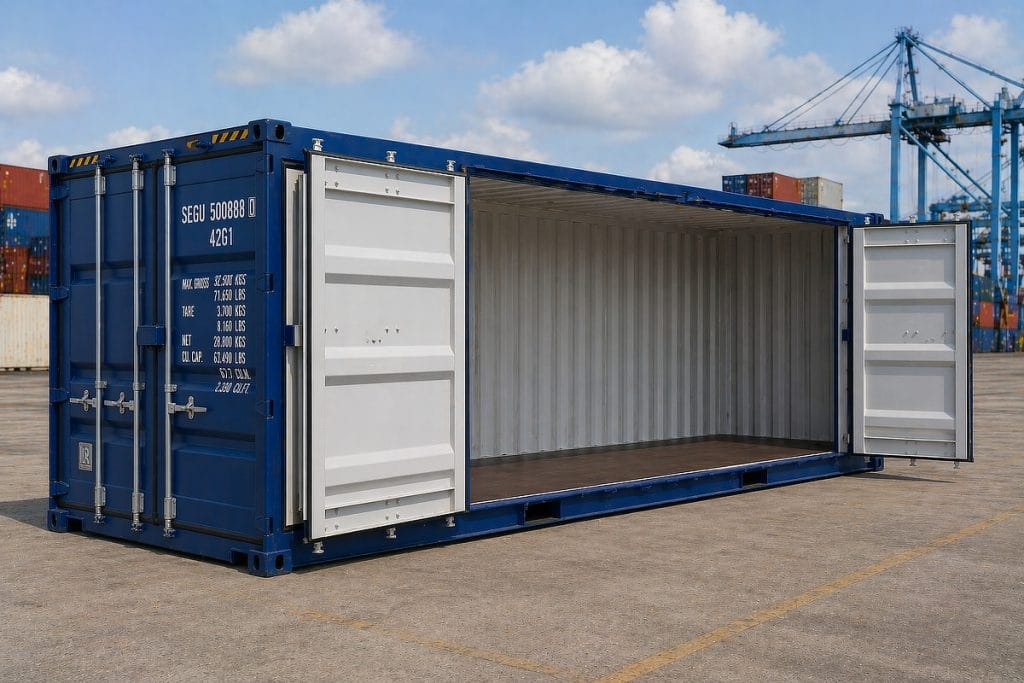
Side Opening Containers
Full side access enables handling of oversized or awkward cargo.
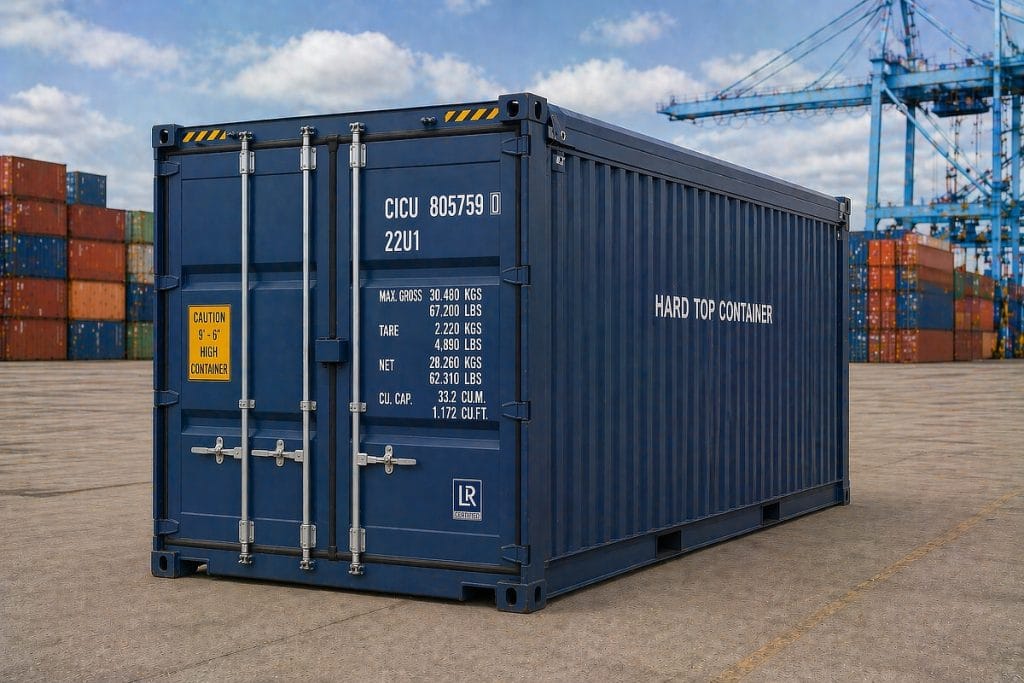
Hard Top Containers
Removable steel roofs provide additional loading flexibility.
These solutions are often overlooked, yet they can significantly improve operational efficiency when used correctly.
Choosing the Right Container: A Practical Framework
Container selection should follow a structured decision-making process:
- Cargo Type: Liquid, dry, perishable, hazardous, oversized
- Dimensions and Weight: Volume vs Weight Optimisation
- Transport Mode: Compatibility across sea, rail, and road
- Cost Efficiency: Balancing freight rates with cargo protection
- Regulatory Compliance: Industry and regional requirements
The objective is not to choose the most available container. It is to choose the most appropriate one.
Container Ownership vs Leasing
Another strategic consideration is whether to own containers or rely on carrier equipment.
Ownership provides:
- Greater control over supply chains
- Long-term cost benefits in high-volume operations
Leasing or using carrier-owned containers offers:
- Flexibility
- Reduced upfront investment
For many businesses, the right answer is situational. Confidex supports both approaches, including container sales for clients requiring dedicated equipment.
Common Mistakes Businesses Make
Despite the availability of options, common errors persist:
- Selecting containers based purely on price
- Ignoring cargo-specific requirements
- Underestimating volume or weight
- Failing to align logistics strategy with business goals
These mistakes are avoidable. But they require expertise to prevent.
How Confidex Supports Containerised Logistics
Confidex approaches container logistics with a solutions-first mindset.
Clients benefit from:
- Tailored container selection aligned to cargo and route
- Access to global equipment networks
- Deep expertise in liquid logistics, including flexitanks
- Seamless coordination across multimodal transport
This is where Baltic precision meets global execution.
Containers Are Strategy, Not Just Steel
Container types may appear standardised, but their application is anything but. Each shipment presents a set of variables that demand careful consideration.
The businesses that treat container selection as a strategic decision gain a competitive advantage. They move goods more efficiently, reduce risk, and optimise costs across their supply chain.
The rest leave value on the table.
If you are moving cargo globally and want to ensure your container strategy is working for you, not against you, it is time to have that conversation.
Request a quote. Start with the right container. Build from there.