Many businesses assess rail freight by looking at the route, the quoted transit time and the price. Those factors matter, but they do not tell the whole story.
A shipment cannot move simply because a railway line exists and the cargo is ready. The correct freight wagons must also be available, technically suitable, positioned at the right terminal and approved for the intended route. If any part of that process is delayed, the planned departure can move with it.
This is why rolling stock logistics has a direct influence on delivery timelines. It affects when loading can begin, whether a train can be assembled as planned and how reliably cargo can move through each stage of an international rail journey.
For manufacturers, exporters and procurement teams, wagon availability is not an operational detail to leave until the final week. It is a capacity decision that can influence storage costs, contractual delivery dates, production continuity and customer satisfaction.
WHAT IS ROLLING STOCK IN FREIGHT LOGISTICS?
Rolling stock is the collective term for railway vehicles that move on rail infrastructure. In freight logistics, it mainly refers to the wagons used to carry cargo.
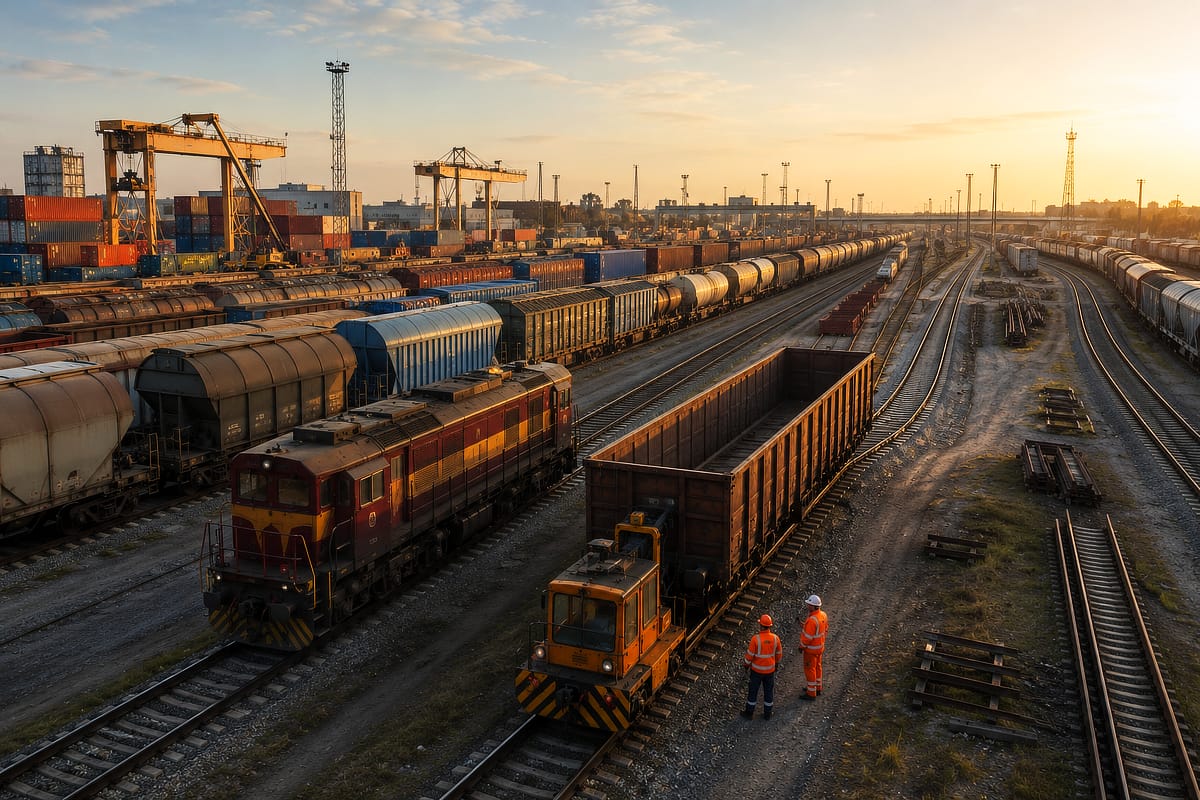
Different commodities require different wagon designs. Covered wagons protect weather-sensitive goods. Open wagons carry materials that can be loaded from above. Flat wagons transport containers, machinery, steel products and oversized cargo. Hopper wagons support the movement of grain, fertilisers and other free-flowing bulk commodities. Tank wagons are used for liquids, chemicals and other products that require dedicated containment.
These wagons are not interchangeable in every situation. Cargo dimensions, weight, loading method, discharge method, safety classification and destination infrastructure all influence the choice of equipment.
A shipment of steel coils may require a wagon with dedicated supports. Grain may require a clean hopper wagon with the correct discharge system. Hazardous liquids may require an approved tank wagon, appropriate documentation and route-specific compliance checks.
Therefore, wagon planning begins with the cargo itself. The first question is not simply whether a wagon is available. The first question is whether the right wagon is available.
WHY WAGON AVAILABILITY AFFECTS THE ENTIRE TIMELINE
Rail freight follows a sequence of interconnected stages. Cargo must be prepared, equipment allocated, wagons positioned, loading arranged, train formation completed and departure capacity secured.
A delay at the wagon allocation stage can affect everything that follows.
For example, a shipper may have cargo ready on Monday and a customer expecting delivery within a defined window. However, if the required wagons are still unloading in another country, undergoing inspection or waiting to be repositioned, loading cannot begin as planned.
The result may include additional warehouse charges, missed production slots, revised customs arrangements or a lost connection with another transport mode.
This is especially important in multimodal logistics. A rail delay can also affect a port booking, vessel connection, road collection or final-mile delivery schedule. What appears to be a small equipment issue can quickly become a wider supply chain problem.
HOW FREIGHT WAGONS ARE ALLOCATED
Freight wagons operate in continuous cycles. A wagon is positioned for loading, receives cargo, travels to its destination, is unloaded and then becomes available for another movement. Depending on the commodity, it may also require cleaning, inspection, maintenance or repositioning before it can be allocated again.
In practice, the cycle may include:
- Empty wagon positioning
- Technical inspection
- Loading and cargo securing
- Main rail movement
- Border or terminal processing
- Unloading
- Cleaning, if required
- Maintenance or repair
- Repositioning for the next shipment
Each stage consumes time. If unloading takes longer than expected, the next allocation may be delayed. If wagons arrive in a region with limited return cargo, they may need to travel empty before they can be used again. If an inspection identifies a technical problem, the wagon may be removed from service.
This explains why a market can experience wagon shortages even when a large number of wagons exist across the wider network. Availability depends on location, timing, condition and compatibility, not only fleet size.
THE DIFFERENCE BETWEEN WAGON AVAILABILITY AND RAIL CAPACITY
Wagon availability and rail capacity are related, but they are not the same.
Wagon availability means having the correct equipment ready for a specific shipment. Rail capacity refers to the ability to move the train through the network. This may include train paths, terminal capacity, locomotive availability, border processing and access to infrastructure.
A shipper can have wagons without a suitable departure slot. Equally, a rail operator may have network capacity while the correct wagons are unavailable.
Successful planning requires both.
This distinction matters when comparing quotes or proposed transit times. A theoretical route may appear fast, but the real schedule depends on equipment and operational capacity being aligned. Experienced logistics providers examine the complete chain rather than relying on distance alone.
WHY WAGON SHORTAGES OCCUR
SEASONAL DEMAND
Agriculture is one of the clearest examples. During harvest periods, demand for hopper wagons can rise sharply across multiple markets at the same time. Exporters may compete for the same equipment, terminals and departure capacity.
Seasonal pressure can also affect construction materials, fertilisers, fuels and other commodities linked to production cycles or weather conditions.
TRADE FLOW IMBALANCES
Freight wagons do not always finish their journey where the next shipment begins. If cargo moves heavily in one direction but return demand is weak, wagons accumulate in one region.
Repositioning empty wagons adds time and cost. It also reduces the number of wagons available for revenue-generating cargo while the equipment is in transit.
MAINTENANCE AND INSPECTION
Freight wagons must remain technically fit for service. Regular inspections, wheelset checks, brake maintenance and repairs protect operational safety.
However, every wagon undergoing maintenance is temporarily unavailable. When maintenance activity overlaps with a demand peak, the available pool can tighten quickly.
BORDER AND TERMINAL DELAYS
International rail transport often involves several operators, infrastructure managers and terminals. Delays at one point can prevent wagons from completing their cycle on time.
Gauge differences can also influence movements between European standard-gauge networks and broader-gauge systems further east. Depending on the route, cargo may require transloading, bogie exchange or another operational solution. These procedures affect how quickly equipment returns to circulation.
SPECIALISED EQUIPMENT REQUIREMENTS
The more specialised the cargo, the smaller the potential equipment pool may be.
A standard container platform is easier to source than a wagon designed for unusually heavy machinery, steel coils or regulated chemical products. Therefore, specialised cargo generally requires earlier planning and more detailed technical preparation.
CHOOSING THE RIGHT WAGON FOR THE CARGO
Using the wrong wagon can create delays, additional handling and safety risks. The selection process should consider the complete movement, not only the first loading point.
COVERED WAGONS
Covered wagons protect goods from weather and external exposure. They may be suitable for packaged products, paper, timber products, palletised goods and other moisture-sensitive cargo.
The loading method, door dimensions and internal capacity must match the cargo and handling equipment at both origin and destination.
OPEN AND HOPPER WAGONS
Open wagons are often used for bulk materials that do not require full weather protection. Hopper wagons are designed for commodities such as grain, fertiliser, aggregates or minerals and support efficient discharge through bottom openings or dedicated unloading systems.
Cargo contamination, cleaning standards and discharge compatibility are important considerations.
FLAT WAGONS AND CONTAINER PLATFORMS
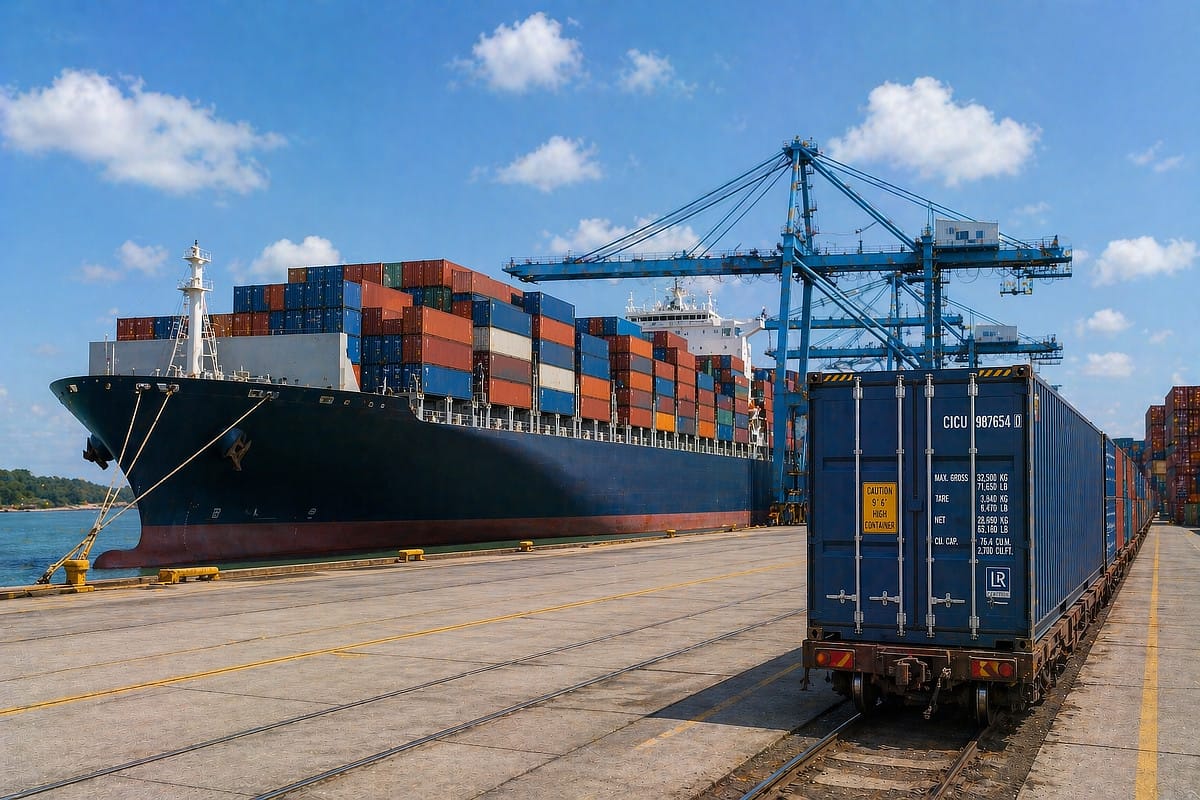
Flat wagons are widely used for containers, steel, machinery, vehicles and project cargo. Container platforms are central to intermodal rail transport because they allow standard containers to move between rail, road and sea networks.
For oversized or heavy cargo, axle loads, loading gauge, securing points and route restrictions must be assessed before booking.
TANK WAGONS
Tank wagons are designed for liquid and gaseous cargo. The product determines the tank specification, lining, valve system, cleaning requirements and safety controls.
Hazardous cargo may also require additional compliance under applicable rail dangerous-goods rules. This makes early technical review essential.
A PRACTICAL EXAMPLE: GRAIN EXPORT DURING PEAK SEASON
Consider an exporter planning to move a large grain volume from the Baltic region to a customer in Central Europe.
The product is ready. Quality checks are complete. Documentation is being prepared, and the destination can receive the cargo.
However, the shipment requires clean hopper wagons. During harvest season, those wagons are already supporting several competing export programmes. Some are still unloading, some are being cleaned, and others are positioned outside the origin region.
If equipment is requested only when the grain is ready, the exporter may face a waiting period. Storage costs continue, contractual dates become harder to meet, and the customer receives less certainty.
If the shipment is planned earlier, the logistics provider can assess equipment supply, reserve capacity, coordinate loading windows and identify alternatives before the cargo becomes urgent.
The lesson is simple. Rail freight reliability is often created weeks before departure.
HOW WAGON AVAILABILITY AFFECTS COST
A wagon shortage does not only affect time. It can also affect the total logistics cost.
Potential cost impacts include:
- Empty wagon repositioning charges
- Higher equipment rental or allocation costs
- Additional storage at origin
- Waiting time at loading facilities
- Rescheduled labour or handling equipment
- Missed terminal or vessel connections
- Alternative routing costs
- Contractual penalties or production disruption
This is why the cheapest initial rail quote is not always the lowest-cost solution. A commercially sound proposal should consider equipment certainty, realistic scheduling and the consequences of delay.
Procurement teams should ask whether wagon supply has been confirmed, how equipment will be positioned and what alternatives exist if the original allocation changes.
HOW LOGISTICS PROVIDERS REDUCE WAGON-RELATED RISK
EARLY EQUIPMENT PLANNING
Early planning gives the logistics provider more time to identify the correct wagon type, check availability and align equipment with the loading schedule.
For regular flows, forecasts can help operators anticipate demand and position wagons more efficiently.
ACCESS TO MULTIPLE OPERATORS AND EQUIPMENT SOURCES
A freight forwarder with a broad partner network may be able to compare capacity across several railway undertakings, wagon owners or leasing providers.
This does not remove market constraints, but it improves flexibility and reduces dependence on a single source.
ROUTE AND TERMINAL ALTERNATIVES
When one corridor or terminal is congested, another may offer a workable solution. Alternative planning may include a different loading terminal, border crossing, transloading point or multimodal combination.
The best alternative is not always the shortest route. It is the route that provides the most reliable overall outcome.
PROACTIVE COMMUNICATION
Customers need accurate information before a delay becomes a crisis. Clear updates on wagon allocation, positioning, loading and departure allow businesses to adjust production, warehousing and customer communication.
Silence creates risk. Visibility creates options.
WHAT SHIPPERS SHOULD ASK BEFORE BOOKING RAIL FREIGHT
Before confirming a rail shipment, businesses should ask several practical questions:
- Which wagon type is required for the cargo?
- Has equipment availability been checked or confirmed?
- Where are the wagons currently positioned?
- Does the loading facility support the selected wagon?
- Are cleaning or inspection requirements involved?
- Are there axle-load, gauge or route restrictions?
- How much time is allowed for loading and unloading?
- What happens if the planned wagons are delayed?
- Is an alternative route or transport mode available?
- How will progress be communicated?
These questions help distinguish a theoretical quotation from an operationally credible transport plan.
THE CONFIDEX APPROACH TO ROLLING STOCK LOGISTICS
At Confidex, rail freight planning considers more than the movement between origin and destination.
We assess cargo characteristics, wagon requirements, equipment availability, loading infrastructure, border procedures, route conditions and onward connections as one coordinated process.
This approach helps customers understand what is realistically achievable before committing to a schedule. It also creates time to secure suitable equipment, prepare documentation and identify alternatives when market conditions are tight.
For businesses moving cargo across Europe, the Baltic region and international rail corridors, this preparation improves predictability and reduces avoidable disruption.
Because in rail freight, a timetable is only credible when the equipment behind it is credible too.
FREQUENTLY ASKED QUESTIONS
WHAT DOES ROLLING STOCK MEAN IN LOGISTICS?
Rolling stock refers to railway vehicles used in transport. In freight logistics, it mainly includes covered wagons, open wagons, hopper wagons, flat wagons, tank wagons and specialised equipment.
WHY DOES WAGON AVAILABILITY DELAY RAIL FREIGHT?
Cargo cannot be loaded until the correct wagon is available, technically suitable and positioned at the loading point. Delays in unloading, cleaning, maintenance or repositioning can affect the next shipment.
HOW EARLY SHOULD WAGONS BE BOOKED?
The ideal lead time depends on cargo type, route, season and equipment availability. Specialised wagons and peak-season shipments generally require earlier planning than standard container movements.
CAN A DIFFERENT WAGON TYPE BE USED IF THE FIRST OPTION IS UNAVAILABLE?
Sometimes, but only if the alternative is technically, commercially and legally suitable. Cargo dimensions, loading method, securing, contamination risk and destination facilities must all be considered.
DOES EARLY BOOKING GUARANTEE WAGON AVAILABILITY?
No logistics provider can eliminate every operational risk. However, early planning materially improves the ability to reserve equipment, compare alternatives and react before a delay affects the wider supply chain.
PLAN RAIL FREIGHT BEFORE CAPACITY BECOMES URGENT
Rail freight can provide efficient, scalable and commercially attractive transport for containers, bulk commodities, industrial goods and specialised cargo.
However, successful rail logistics depends on more than distance and advertised transit time. It depends on the correct rolling stock being available where and when it is needed.
Businesses that involve their logistics partner early gain more options. They can secure suitable equipment, coordinate loading, assess route constraints and prepare alternatives before market pressure limits capacity.
If your business is planning rail freight across Europe, the Baltic region or international multimodal corridors, Confidex can help assess wagon requirements, route options and realistic timelines.
Speak with Confidex before your cargo becomes urgent.