
Global trade runs on documentation. Containers move across oceans, rail networks stretch across continents, and trucks cross borders daily. Yet behind every shipment sits a small stack of paperwork that determines ownership, responsibility, and the right to collect cargo.
At the centre of that paperwork sits the Bill of Lading.
For companies working with freight forwarders, two versions often appear: the House Bill of Lading (HBL) and the Master Bill of Lading (MBL).
To the untrained eye, they look similar. In reality, they serve very different roles.
Understanding the difference between these two documents is not just an administrative detail. It directly affects cargo control, liability, and the structure of the shipping contract.
This guide explains the distinction clearly and shows how the two documents work together in modern logistics.
Why Bills of Lading Matter in Global Shipping
A Bill of Lading performs three fundamental functions in international trade.
First, it acts as a receipt for cargo. When goods are loaded onto a vessel, the carrier confirms receipt of the shipment.
Second, it forms a contract of carriage. The document outlines the agreement between the shipper and the carrier responsible for transporting the cargo.
Third, it serves as a document of title. In many transactions, possession of the original Bill of Lading entitles the holder to claim the goods at the destination port.
Without this document, cargo cannot legally move through international transport systems. It is the backbone of maritime logistics and a cornerstone of global trade documentation.
If you want a broader explanation of the role of this document, our guide on Bill of Lading fundamentals provides a deeper overview of how it functions across shipping operations.
What Is a Master Bill of Lading (MBL)?
The Master Bill of Lading is issued by the shipping line or ocean carrier.
It represents the contract between the carrier and the freight forwarder or NVOCC (Non-Vessel Operating Common Carrier) responsible for the booking.
In simple terms, the MBL records the relationship between the company that owns or operates the vessel and the intermediary managing the cargo shipment.
Typical characteristics of a Master Bill of Lading include:
- Issued by the ocean carrier
- Lists the freight forwarder as the shipper
- Lists the forwarder’s agent at the destination as the consignee
- Covers the entire container or consolidated shipment
- Reflects the agreement with the shipping line
In most international shipments arranged through a logistics partner, the cargo owner does not appear directly on the MBL.
Instead, the freight forwarder manages the carrier relationship and issues a separate document to the customer. That second document is the House Bill of Lading.
What Is a House Bill of Lading (HBL)?
The House Bill of Lading is issued by the freight forwarder or logistics provider.
It represents the contract between the shipper (the cargo owner) and the freight forwarder managing the shipment.
While the MBL governs the relationship with the shipping line, the HBL governs the relationship with the client.
This document allows freight forwarders to consolidate cargo from multiple customers while maintaining clear documentation for each individual shipment.
Key characteristics of a House Bill of Lading include:
- Issued by the freight forwarder
- Lists the cargo owner as the shipper
- Lists the buyer or receiver as the consignee
- Covers the individual shipment belonging to that customer
- Functions as the forwarder’s transport contract with the shipper
In other words, the HBL is the document the customer interacts with, while the MBL remains largely within the carrier-forwarder relationship.
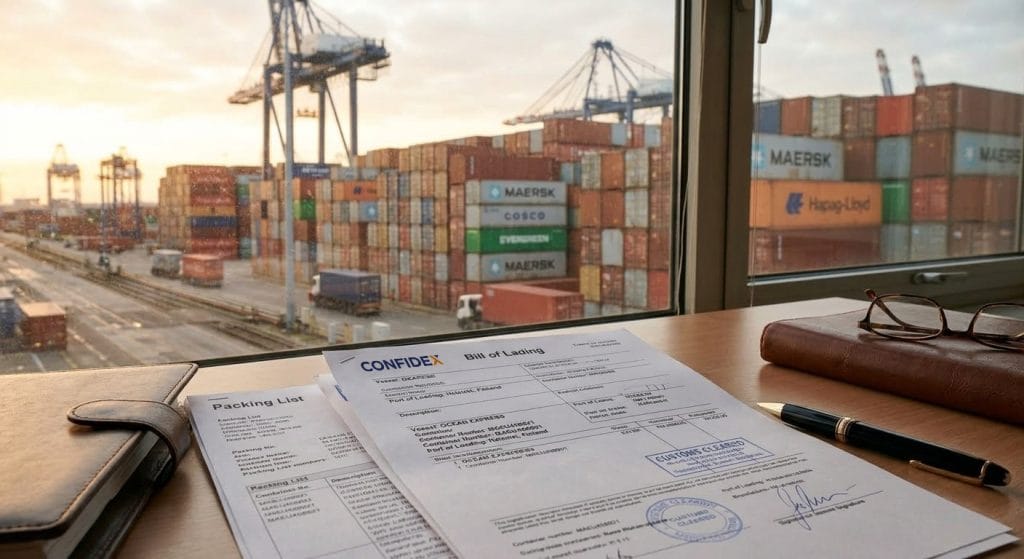
The Key Differences Between HBL and MBL
The easiest way to understand the distinction is to focus on who issues the document and with whom the contract is with.
| Aspect | House Bill of Lading (HBL) | Master Bill of Lading (MBL) |
| Issued by | Freight forwarder or NVOCC | Shipping line or ocean carrier |
| Contract between | Shipper and freight forwarder | Freight forwarder and carrier |
| Shipper listed | Actual cargo owner | Freight forwarder |
| Consignee listed | Buyer or receiver | Forwarder’s agent or destination office |
| Scope | Individual customer shipment | Entire container or consolidated cargo |
| Purpose | Customer-facing shipping document | Carrier-facing transport contract |
Put simply, the HBL manages the customer relationship, while the MBL manages the carrier relationship.
Both documents refer to the same physical cargo, but they operate at different levels of the logistics chain.
How HBL and MBL Work Together in Practice
To see how the two documents interact, imagine a typical international shipment.
A food producer in Europe exports goods to a distributor in Asia. Instead of booking directly with a shipping line, the exporter works with a logistics partner to manage the transport.
The process typically unfolds as follows:
- The exporter delivers cargo to the freight forwarder.
- The forwarder books space with an ocean carrier.
- The carrier issues a Master Bill of Lading to the forwarder.
- The forwarder issues a House Bill of Lading to the exporter.
- At the destination, the consignee presents the HBL to claim the cargo.
Behind the scenes, the forwarder manages the relationship with the shipping line through the MBL.
To the exporter and importer, however, the HBL is the document that governs their shipment.
This structure allows freight forwarders to aggregate multiple shipments into a single container, improving efficiency and reducing costs.
Why Freight Forwarders Use Both Documents
Freight forwarding companies operate as intermediaries between cargo owners and carriers.
To manage this role effectively, they need documentation that reflects both sides of the relationship.
Using both an HBL and an MBL allows them to:
Maintain contractual clarity
The forwarder has a formal contract with the carrier through the MBL and a separate contract with the shipper through the HBL.
Consolidate cargo efficiently
Multiple shippers can share container space while still receiving individual shipping documentation.
Manage liability and risk
Each document defines responsibility at different levels of the logistics chain.
Streamline global logistics operations
Forwarders can coordinate multimodal transport while maintaining clear documentation for each client shipment.
This system has become standard practice across international freight forwarding operations.
When Shippers Should Pay Close Attention
For most exporters and importers, the presence of two Bills of Lading is perfectly normal.
However, there are situations where understanding the distinction becomes critical.
One example is letter of credit transactions. Banks often require specific document formats, and confusion between an HBL and an MBL can delay payment.
Another scenario occurs when cargo ownership changes during transit. Because Bills of Lading can function as documents of title, the correct version must be presented to release the goods.
Finally, in the rare event of cargo disputes or insurance claims, the specific contract governing the shipment becomes extremely important.
In these situations, knowing whether the HBL or MBL applies can determine where responsibility lies.
Common Misunderstandings in Shipping Documentation
Despite their importance, Bills of Lading are frequently misunderstood by businesses entering international trade.
One common misconception is that the two documents represent different shipments. They do not. They refer to the same cargo, simply recorded through different contractual relationships.
Another misunderstanding is assuming that the shipping line deals directly with the cargo owner when a forwarder is involved. In reality, the carrier’s contract typically exists only with the freight forwarder.
A third mistake is failing to verify document details before shipment. Incorrect consignee information or mismatched references can delay cargo release at destination ports.
Experienced logistics partners carefully review documentation to prevent these problems long before a container reaches the water.
The Role of Documentation in Modern Logistics
In today’s logistics environment, physical transportation is only part of the equation.
Documentation, data accuracy, and regulatory compliance have become just as important as the movement of cargo itself.
Bills of Lading sit at the centre of this system.
They connect shippers, freight forwarders, carriers, insurers, customs authorities, and banks into a single chain of accountability.
Understanding documents such as the HBL and MBL gives businesses greater control over their supply chains and reduces the risk of costly delays.
How Confidex Manages Shipping Documentation
At Confidex, documentation is treated with the same precision as cargo movement itself.
Our logistics specialists coordinate every stage of the shipping process, ensuring that Bills of Lading and other transport documents align perfectly with the shipment structure.
Whether cargo moves through container shipping, rail transport, or multimodal logistics networks, the goal remains the same: clarity, compliance, and seamless cargo delivery.
For businesses moving liquids, bulk commodities, or containerised goods across international markets, that level of precision makes a measurable difference.
The difference between a House Bill of Lading and a Master Bill of Lading is straightforward once you understand the structure of freight forwarding.
The HBL represents the agreement between the shipper and the logistics provider.
The MBL represents the agreement between the logistics provider and the carrier.
Two documents. One shipment. Each plays a specific role in moving goods across the global supply chain.
For companies involved in international trade, mastering these details is not bureaucracy. It is part of operating confidently in the world of global logistics.